Source Water Softening Ion Exchange Resin for Industrial, Municipal, and Food Uses
Compare 30 listings of Water Softening Ion Exchange Resin designed for hardness removal in industrial, municipal, and food-grade applications. Buyers can evaluate specifications like exchange capacity, matrix type, and certifications to select the right supplier.
Key considerations
Products List



Comprehensive Sourcing Guide
Strategic Sourcing Guide for Water Softening Ion Exchange Resin
Understanding the Core Technology and Product Attributes
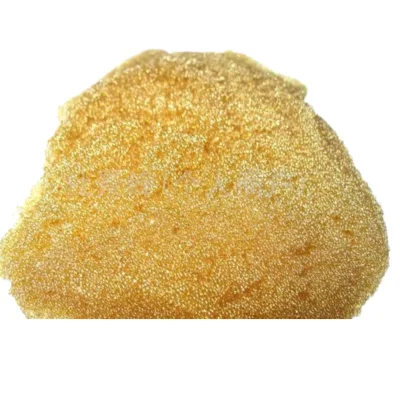
When sourcing Water Softening Ion Exchange Resin, buyers must first distinguish between the physical form of the product and its chemical function. The market offers resin in various appearances, including granular forms, spheres, and yellow-brown variants, depending on the specific manufacturer and intended application. The fundamental working principle for these products is ion exchange, a process specifically designed for hardness removal and water softening. The most common chemical matrix for these resins is a styrene-divinylbenzene (DVB) copolymer, which provides the structural integrity necessary for repeated regeneration cycles.
A critical attribute to verify is the functional group. For strong acid cation-exchange resins used in softening, the functional group is typically represented as -N+(CH3)3, indicating a quaternary ammonium structure that effectively captures calcium and magnesium ions. The ionic form of the resin upon delivery is often sodium (Na), which is essential for the initial softening process. Buyers should also note that while some products are described as alkaline surface disposal agents, the primary application remains hardness removal. The resin operates within a broad pH range of 1 to 14, allowing for versatility in different water chemistries, though specific operating temperatures are usually constrained between 5 and 50 degrees Celsius.
Technical Specifications and Performance Metrics
Evaluating the technical specifications is the most rigorous step in the procurement process. The physical properties of the resin directly impact its longevity and efficiency in a water treatment system. A key metric is the bulk density, which typically falls between 0.77 and 0.87 g/mL. This density influences the bed height required in a treatment vessel and the backwash flow rates needed during regeneration. Another vital parameter is the water retention or moisture content, which generally ranges from 45% to 55% for the chloride type or similar forms. Maintaining this moisture level is crucial to prevent the resin beads from cracking or shrinking during storage and operation.
The exchange capacity is perhaps the most significant performance indicator. Buyers should look for products with a volume exchange capacity of at least 1.9 equivalents per liter and a mass exchange capacity of 4.5 equivalents per kilogram. These figures determine how much hardness the resin can remove before regeneration is required. The sphericity after attrition should be greater than 90%, ensuring that the beads remain round and do not break down into fines that could clog the system or cause pressure drops. The productivity of the resin is often cited at 99.9%, indicating high efficiency in ion exchange reactions. Additionally, the resin must be capable of handling inlet water hardness up to 8 mmol/L while producing effluent with hardness less than 0.03 mmol/L. The system pressure requirements are typically between 0.2 and 0.4 MPa, and the relative humidity during operation should remain below 95% at 25 degrees Celsius.
Compliance, Certification, and Regulatory Standards
In the B2B procurement of water treatment chemicals, compliance with international standards is non-negotiable. Reputable suppliers provide documentation verifying that their products meet rigorous quality and safety benchmarks. Common certifications observed in this sector include ISO 9001 for quality management systems and ISO 14001 for environmental management. For applications involving food, beverage, or pharmaceutical industries, certifications such as Halal, Kosher, and WQA (Water Quality Association) are often required to ensure the resin does not leach harmful substances into the treated water.
Buyers must also verify that the resin meets specific grade requirements. For instance, "Food Grade" designation is essential if the water is intended for human consumption or food processing. The product origin is a critical factor in regulatory compliance; many high-quality resins are manufactured in China, specifically in regions like Shaanxi, where specialized chemical manufacturing clusters exist. However, the origin alone does not guarantee quality; it must be paired with valid test reports. Machinery test reports should be provided to validate the physical and chemical properties of the resin batch. While specific certification names like CE are frequently mentioned, buyers should always request the actual certificate documents rather than relying on marketing claims.
Cost Drivers and Procurement Economics
The pricing of ion exchange resin is influenced by several variables, including the specific model, packaging, and order volume. The observed market price range is extensive, spanning from $0.68 to $15,000, reflecting the difference between small laboratory samples and bulk industrial shipments. The minimum order quantity (MOQ) typically ranges from 1 unit to 1,000 units, offering flexibility for both pilot testing and large-scale deployment. Packaging plays a significant role in cost; standard units are often supplied in PE bags with a capacity of 25 liters or 25 kilograms.
The unit weight of a standard package is usually 25 kg, which aligns with the 25L/bag standard specification. When evaluating cost, buyers should consider the total cost of ownership rather than just the unit price. A resin with a higher exchange capacity may have a higher upfront cost but offers better long-term value by reducing the frequency of regeneration and chemical usage. The selling units are typically single items, meaning the price is quoted per bag or per drum. Buyers should also factor in the logistics costs associated with shipping heavy chemical products, as the density and volume of the resin can significantly impact freight charges.
Typical Applications and Operational Integration
Water Softening Ion Exchange Resin is primarily utilized for hardness removal in industrial circulating water systems. The resin functions by exchanging sodium ions in the resin matrix with calcium and magnesium ions in the water, effectively "softening" the water. This process is critical for preventing scale formation in boilers, cooling towers, and heat exchangers. The application extends to various control modes, including flow rate type and time type control, which dictate when the regeneration cycle is initiated.
The resin is compatible with pipeline inlet modes, allowing for seamless integration into existing water treatment infrastructure. The working ambient temperature and relative humidity constraints must be respected to ensure optimal performance. In industrial settings, the resin is often part of a larger system that includes a control valve and a brine tank. The specific model, such as SC120 or SC130, may dictate the optimal application scenario, with different models offering varying capacities and physical characteristics. The product is also known by other names such as IX Resin or Ion Exchange Resin, and its function is strictly defined as a water softener.
Supplier Evaluation and Quality Assurance
Selecting a reliable supplier requires a thorough evaluation of their technical capabilities and quality assurance processes. Buyers should verify that the supplier provides machinery test reports and that the product matches the specified model numbers like SC120 or SC130. The brand name, such as Purolite, is often associated with high-quality resins, but generic equivalents are also available. It is essential to confirm that the supplier adheres to the stated standards, such as the 25L/bag packaging and the specific physical properties like bulk density and moisture content.
Quality control should be an ongoing process, not just a one-time check. Buyers should request samples to verify the appearance, whether it is white, yellow-brown, or spherical, and test the exchange capacity in a controlled environment. The warranty period, typically one year, should be clearly defined in the contract. Additionally, the supplier should be able to provide a detailed product data sheet that includes the pH range, ionic form, and working principles. The customization availability is another factor; some suppliers offer tailored solutions for specific water chemistries or flow rates.
Long-Term Procurement and Lifecycle Management
Long-term procurement strategies for ion exchange resin involve planning for the entire lifecycle of the product. This includes monitoring the resin's performance over time, as the exchange capacity will gradually decrease due to fouling or physical degradation. The sphericity after attrition is a key indicator of the resin's durability; a value of 90% or higher suggests the resin can withstand the mechanical stress of backwashing for an extended period. Buyers should establish a schedule for resin replacement based on the observed productivity and exchange capacity loss.
Environmental protection is a significant consideration in modern procurement. The product is marked as environmentally friendly, and suppliers should provide guidance on the safe disposal of spent resin. The alkaline surface disposal agent property indicates that the resin may require specific handling procedures during regeneration and disposal. Finally, buyers should maintain a relationship with the supplier to ensure a steady supply of replacement resin and access to technical support for troubleshooting operational issues. By focusing on these long-term factors, organizations can ensure a reliable and cost-effective water softening solution.
FAQs
What is the primary function of this Water Softening Ion Exchange Resin?
The primary function is hardness removal for water softening applications. It operates via ion exchange to capture calcium and magnesium ions, effectively preventing scale formation in industrial circulating water systems and boilers.
Which specifications define the physical properties of the resin?
The resin features a styrene-DVB copolymer matrix with a bulk density between 0.77 and 0.87. It maintains a moisture content of 45% to 50% and exhibits a sphericity after attrition of at least 90%.
Can the resin operate within a wide pH range?
Yes, the resin functions effectively within a pH range of 1 to 14. This broad operational window allows it to handle diverse water chemistries while maintaining structural integrity during the softening process.
What certifications are available for this Water Softening Ion Exchange Resin?
Available certifications include WQA, CE, Halal, ISO9001, ISO14001, and Kosher. These documents verify compliance with international quality and safety standards, particularly for food grade applications requiring strict regulatory adherence.
How is the resin packaged and what is the standard unit weight?
The resin is packaged in PE bags with a standard capacity of 25 liters. Each unit typically weighs 25 kilograms, aligning with the 25L/bag specification for industrial shipping and handling.
What is the minimum order quantity for purchasing this resin?
The minimum order quantity ranges from 1 to 1000 units depending on the supplier. This flexibility allows buyers to order small samples for testing or large volumes for immediate industrial deployment.
Which functional group enables the ion exchange process in this resin?
The resin utilizes a quaternary ammonium functional group represented as -N+(CH3)3. This structure facilitates the exchange of sodium ions with hardness ions, ensuring efficient water softening performance.
Can the resin be customized for specific water treatment needs?
Yes, customization is available to tailor the resin for specific applications. Buyers can request modifications to meet unique flow rates or water chemistry requirements while maintaining core performance metrics.